

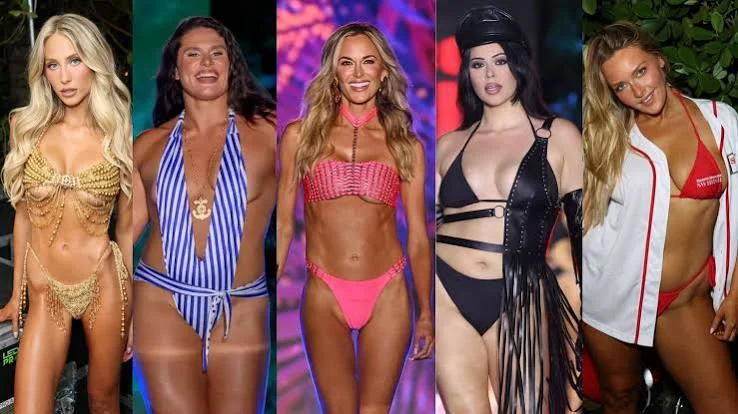
Size inclusive fashion brands and runway shows are winning. In February 2026, the Sports Illustrated Swimsuit runway show broke away from the usual fashion scene. Instead of focusing on just one body type, the show featured curves and mid-size models wearing clothes that once left them out.
Grammy-winning artist Lizzo, rugby player Ilona Maher, and Paralympic swimmer Ali Truwit all walked this runway. Alix Earle, a creator famous online rather than as a model, joined them. This wasn’t just a special diversity moment—it was the main event.
It’s no surprise that people around the world welcomed this year’s swimsuit collection. This stands in sharp contrast to the backlash Wish faced in late 2025 for only showing thin models stretching fabric to show fit.
The fashion industry is being challenged by everyday shoppers. People are no longer accepting the narrow, airbrushed idea of beauty that has dominated for years. They want more representation, realness, and to see bodies like their own. They’re speaking up on social media and with their purchases. This article looks at how shoppers are driving these changes and how indie brands can embrace body diversity for better business results.
More Examples of Runways and Size Inclusive Fashion Brands
Currently, the global plus-size clothing market is worth $314.5 billion and could grow to $375.7 billion by 2030. This growth shows that people are tired of the difference between ads and their own reflections.
That’s why many fashion brands are now making a real effort to show inclusivity. Here are a few examples:
- Chanel’s Fall 2026 Ready to Wear runway show in Paris featured 15 models over the age of 40, including 50-year-old Stephanie Cavalli, who officially opened the show.
- Bottega Veneta’s (Fall/Winter 2026) show featured older models reflecting real people and timeless dressing on the catwalk.
- Balenciaga’s Pre-Fall 2026 & Couture had Demna upholding this tradition. As he’s known to do, he featured real artists, engineers, law students, and brand employees alongside celebrity appearances on the runway.
- Vetements Spring/Summer 2025 staged a semi-abandoned mall, and the brand embraced a DIY ethos, casting a diverse array of people..
- Prada (Fall/Winter 2026) stripped back to basics, featuring 15 models walking the runway multiple times to show how layers are peeled off and utilized throughout an everyday person’s day.
Size Inclusive Fashion Brands Beyond Runways
On the business side, brands like Aerie, Dove, and Savage X Fenty have focused on body diversity and inclusivity for years. In many ways, they now define what it means to be a size-inclusive fashion brand.
The numbers show that everyday shoppers want this. For Fenty, body inclusivity is not just a campaign—it’s a core strategy. This approach has worked, especially since 67% of American women wear a size 16 or larger.
These brands also work directly with creators who have real Content from body-positivity influencers is driving engagement rates close to 6.8%, nearly double the industry average. Some brands have seen conversion rates rise by as much as 28% through these partnerships.audiences, and it’s paying off.
Consider Remi Bader’s design partnership with a retailer, Komal Pandey’s body-neutral styling, Nicolette Mason’s luxury collaboration up to size 24, and Karron S. Dhinggra’s menswear partnership up to 5XL. These are all recent examples of brands choosing to work directly with people who already have their own audiences, instead of using traditional casting.
Some Brands & Runway Didn’t Get The Memo.
Still, even with the success of size-inclusive brands, not everyone is following their lead. This inconsistency is important to talk about.
A few weeks before that swimsuit show, Vogue Business released its Spring/Summer 2026 size-inclusivity report on the major fashion weeks. It found that 97.1% of runway looks were straight size, US 0-4.
Together, regular and plus-size bodies made up just 3% of all looks shown in New York, London, Milan, and Paris. One booker from a plus-size modeling agency told reporters that jobs for her models were becoming scarce.
This pullback is happening in stores too. Target’s extended sizing dropped by 37% between March 2025 and March 2026, with a 30% decrease in just the previous six months. Old Navy’s plus-size options fell by 12% during the same time.
Industry reports say this is partly due to the rise of GLP-1 weight loss drugs and a shift back toward “skinny culture.” Some brands believe they are adjusting to what the market wants. As a result, many plus-size shoppers say their options are disappearing.
What makes this worse for these brands is not just the retreat, but the inconsistency. Some brands treated inclusive sizing as a campaign instead of a real commitment, then quietly scaled back when sales dropped or costs went up. Shoppers noticed and responded with accusations of hypocrisy and “virtue signaling,” which can be harder to recover from than never making the promise in the first place.
Becoming Size Influence as an Indie Brand is a Business Edge
This inconsistency from big retailers is where your indie brand can stand out. Brands like Target or Old Navy treat inclusive sizing as a seasonal campaign they can drop if it’s not working. As an indie brand, you don’t have the same reason to treat body diversity as something to change based on short-term results. This means your brand can be noticed for being more authentic and intentional.
This matters for business, not just ethics. Shoppers are speaking up. One mid-size person in another Vogue Customer Sizing Survey said, “Brands should consider the different types when creating garments such that a size 12 garment made for someone with no curves will not fit a size 12 for someone with curves.” So, it’s not just about making stylish clothes for bigger bodies, but also about thinking about different shapes and proportions.
These shoppers are supporting brands and helping them see engagement rates twice the industry average when brands get it right. If you succeed as an indie brand, you’ll earn some of the most loyal customers out there. An indie label that truly represents people would see massive sales. And beyond that, it would build the kind of loyalty that’s rare today. This is especially as shoppers have learned not to expect consistency from bigger brands.
How MakeOutfit Helps You Become One of the Size-Inclusive Fashion Brands
As indie designers, we sometimes forget that body diversity is more than just a casting choice or a campaign. For your indie brand, it needs to be part of the whole buying experience. Otherwise, it becomes just another example of the inconsistency shoppers are already tired of.
That’s the gap that MakeOutfit is built to close on both sides of the transaction.
For your indie brand, it means:
- You can build a real lookbook made of photos of real people with real bodies
- You can showcase your brand to a community of high-intent shoppers
- Your brand can create a size-diverse lookbook without needing the big studio budget that used to make this expensive.
- You can sell directly to your customers, build strong relationships, and increase your profits, all while just paying a subscription fee.
For everyday shoppers, it means:
- Access to a virtual try-on and AI outfit builder where you can upload your photos and see how clothes look on you.
- Browse through catalogs of curated photos on real bodies.
- Mix and match outfits to make sure your purchases are more intentional.
For indie fashion brands, you won’t need a seat at fashion week to participate in this body inclusivity that’s going to make you stand out. Here, you can build your own version using the same tools that have already proven themselves in the influencer economy.
Wrapping Up
Right now, size-inclusive fashion brands are leading the way. Consumers have made it clear—they want to see real bodies and see themselves in the brands they support. Your customers want representation and fashion that fits their lives.
Brands like Fenty are already listening and seeing more engagement, loyalty, and sales. As an independent brand, you have a huge opportunity. Consumers want brands with unique styles that also represent them. Platforms like MakeOutfit make it easier than ever for indie designers to reach these shoppers, show their clothes on diverse bodies, and build sustainable, inclusive businesses.