

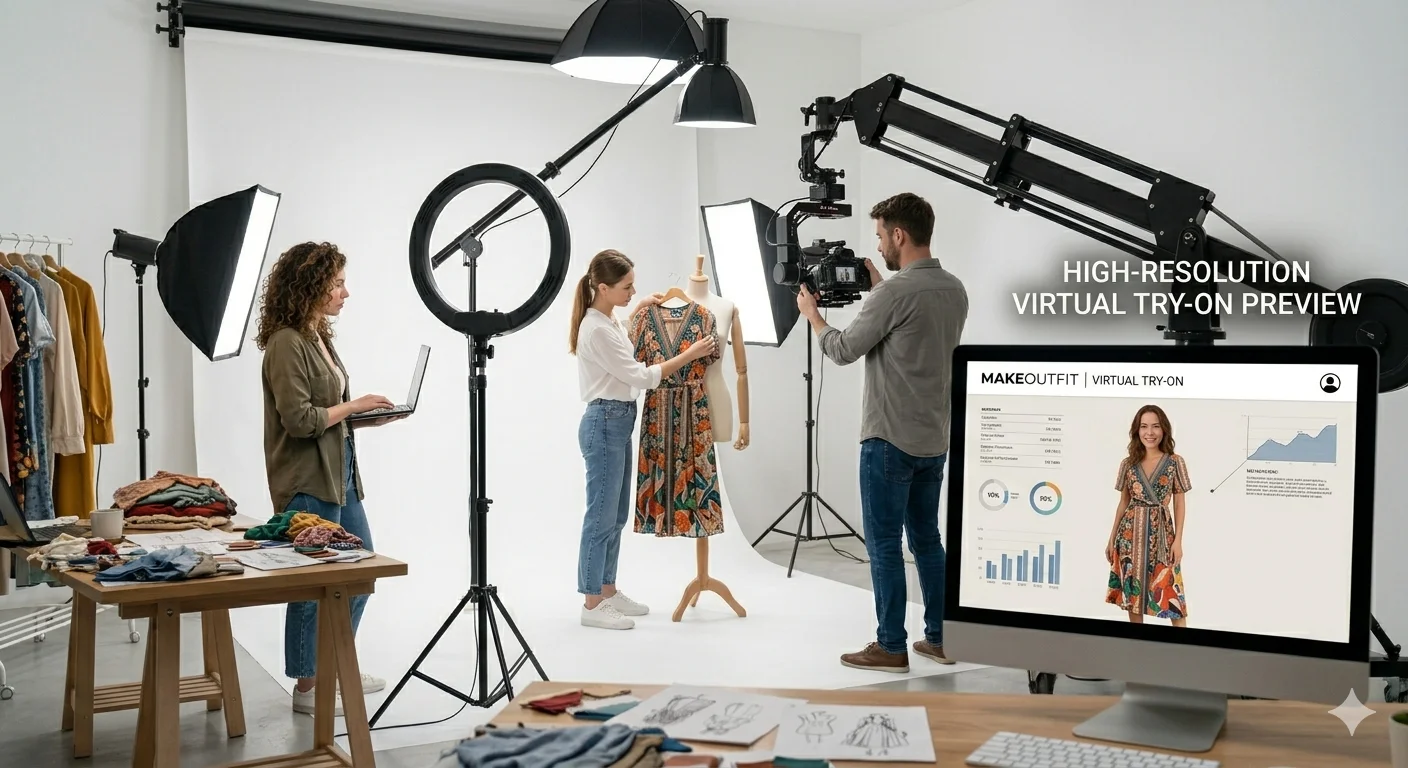
You’ve put months into designing, sourcing, and launching your collection, but when you finally go live, there’s barely any response. You might ask yourself: Why does my Indie fashion brand marketing suck? How do I get my fashion brand noticed? Why am I posting on Instagram, TikTok, and Pinterest but not seeing sales? How can I bring more people to my collection and actually make sales?
It’s tough to admit, but many new fashion designers and startups struggle with these same issues and don’t make it past their first three years in business.
If this sounds like your experience, you need an indie fashion brand marketing strategy that doesn’t require you to become a full-time content creator or spend all your money on ads.
Platforms like MakeOutfit, which offer lookbook discovery feeds and virtual try-on, can help more people find your brand and bring shoppers directly to your collection.
Why Social Media and Grassroots Marketing aren’t Enough to Make Your Indie Fashion Brand Stand Out
More shoppers are interested in personalized, sustainable, and socially responsible products like yours. But if you keep using the same old marketing methods, you’ll keep running into the same problems. Many indie brands have long depended on grassroots marketing and social media to build a following, but that has changed. Here are some issues with the current approach:
The death of organic social reach
Social media used to be a great way to get your clothing brand noticed. Now, it often means making endless videos, chasing trends, and creating lots of content just to keep people’s attention. While your customers are on Instagram and TikTok, these platforms now push ads more than ever. To stand out, you need eye-catching campaigns and strong storytelling, which usually means spending more on ads just to reach both your followers and new people.
When your indie fashion brand marketing depends on algorithms that keep moving the goalposts, you’re building on rented land.

Being cool and quirky costs a lot online
Even though people appreciate brands that are different, social media often hides niche styles. Algorithms tend to promote mainstream looks, so it’s tough for your unique products to get noticed without a lot of effort. You’re under pressure to grow fast but still stay true to your values, which can make traditional indie fashion marketing feel impossible to keep up.
Static Lookbooks That Go Nowhere
Maybe you’ve already created lookbooks for your website. That’s a smart move, but it’s only the first step. You also need people to actually see your lookbook. The real challenge is getting it in front of the right audience. Customers want to discover new brands by chance, but there isn’t a central place where great visuals and fit come together.
The “Commodity Trap” vs Curated Styling
Of course, you need to list your products on your online store. But shoppers also want to see how to style each piece. Platforms like Pinterest and the Shop app can help people find your brand, but you could boost sales even more by letting customers see the clothes on themselves. A virtual try-on tool is the missing piece for your marketing plan. It’s no surprise that many shoppers hesitate because they wonder, “How will this look on me?”

Image source: Unsplash
Broken Fashion SEO
Traditional e-commerce fashion SEO often loses the visual appeal shoppers want. People look for inspiration, but usually find long text descriptions instead. You might use keywords to help your store rank, but those terms aren’t always what shoppers are searching for. For example, someone looking for “summer vibes” might not find your store right away. This gap means your SEO might bring visitors, but not the ones most likely to buy.
How MakeOutfit Can Help Get Discovered and Grow Sales
MakeOutfit has a mobile app and website built to help indie fashion brands market themselves. The platform lets you create lookbooks from your catalog, and customers can use virtual try-on to see how your clothes fit. They can also share their favorite looks, which helps more people discover your brand. Instead of getting lost in big marketplace algorithms, your brand gets noticed through real, authentic styling.

Here’s what MakeOutfit can do for your brand:
A Connected Discovery Engine
Your collection appears in a scrollable, visually curated feed, so each item is more than just a static page.
Customers can mix and match every piece in your lookbook to see how they work together. There’s no need to download extra apps or create avatars. The discovery feed lets your catalog become part of the fashion discovery process, giving shoppers a complete experience of your brand.
AI Virtual Try-On
Customers can upload a photo of themselves and use AI to virtually try on your clothes. This helps remove the hesitation that often stops people from buying. They see how your clothes fit on their own body and get a feel for your brand’s style. Once they see their look, they can easily click “Shop the Look” or “Save to Collection.”
When they click through to your store, they’re ready to buy—not just browsing. This is how you finally get your lookbook and collection noticed.
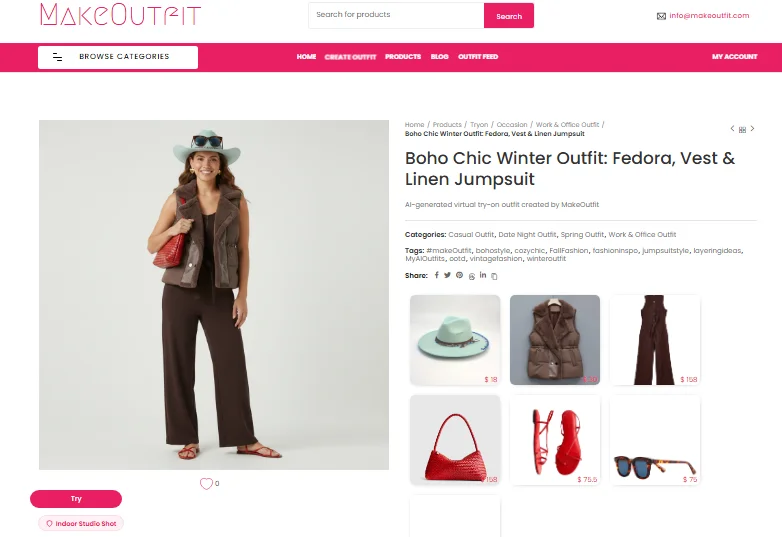
From “Shop Grid” to “Style Feed”
On MakeOutfit, customers first see your brand through an editorial catalog. By showing full outfits rather than individual products, you attract shoppers who are ready to buy. This move from a basic product grid to an engaging style feed is what modern shoppers want. It aligns with their growing interest in context, storytelling, and shopping, reflecting their identity.
Leverage Your Customers
Beyond discovery and virtual try-on, MakeOutfit also transforms customers into collaborators. On the MakeOutfit app, you can invite real everyday customers. Such customers already love your clothes and embody your brand spirit, and can model pieces from your latest collection directly through the platform. They can use the virtual try-on tool to make standout photos with their clothes, which is a win-win. Therefore, your customers have a real opportunity to become models, and you don’t have to spend so much on photoshoots. Their images become a part of your live lookbook in the Discovery Feed. This is an amazing way that taps directly into building community around your brand. When potential new customers see your dress on a real body that looks like theirs, someone who genuinely rocks your style, the emotional connection deepens. The fit confidence spikes. Suddenly, your brand feels less like a distant label and more like a circle they want to join.
Together, the discovery feed, virtual try-on, and community modeling create a self-reinforcing loop that grows your brand visibility organically from the inside out. This is an indie fashion brand marketing built for how people actually discover fashion today.
3 Steps to Upgrade Your Indie Fashion Brand Marketing with MakeOutfit
It’s easy to get started on MakeOutfit, but making your brand stand out takes some planning. Here’s a quick guide for indie designers who want to use MakeOutfit as their main way to reach customers.
Step 1: Curate the Aesthetic
Before uploading any images, pause and plan your approach. MakeOutfit’s discovery feed can help you reach more people, but your lookbooks need to be memorable. Try grouping your standout pieces by vibe, story, or season instead of just by product type. For example, use themes like “Coastal Quiet Luxury,” “Soft Utility,” or “Date Night in the City” instead of just “Dresses” or “Tops.” Each lookbook should feel like a mini editorial. Keep your color scheme and mood consistent throughout the shoot.
Step 2: Optimize your tags
Once you’ve uploaded and the virtual-try-on mapping is enabled for each piece, also tag your pieces strategically. Use high-search-volume aesthetic keywords on the platform to help people quickly find your lookbooks. Some include “Y2K minimal”, “soft tailoring,” or “European summer.” Add color tags, mood descriptors, and occasion-based terms. Good tagging is the bridge that helps customers discover fashion items they didn’t even know they needed. This practice also strengthens your wider ecommerce fashion SEO foundation, making your brand more findable across the web.
Step 3: Invite engagement
Publishing your lookbook with the right tags puts your brand where discovery is already happening. Amplify that by encouraging users to save your looks and share them on their own social media. Actively share your MakeOutfit boards on Instagram and TikTok as well. This full-circle loop invites your existing audience into the discovery feed, shows them your clothes on real bodies through try-on, and gives them a direct path to shop. It sustains the personal, relevant, and shareable experiences you want to be known for. Ultimately, this level of connecting with indie fashion turns casual scrollers into super fans.
Wrapping Up
More consumers want to shop from indie fashion brands. But you need to be more intentional about the tools you use to help them discover you. Your indie fashion brand’s marketing success demands creating strong visual desire, involving customers in the storytelling, and consistently using discovery and discovery-plus-try-on platforms like MakeOutfit.
Meeting these needs can help your brand grow quickly. Giving customers confidence in fit and making an emotional connection is the new way to build loyalty.
MakeOutfit provides that central spot for reaching, entertaining and making them feel something about your brand.“Ready to get discovered? Create your free brand profile on MakeOutfit today and upload your first LookBook to land directly in the discovery feed.”