

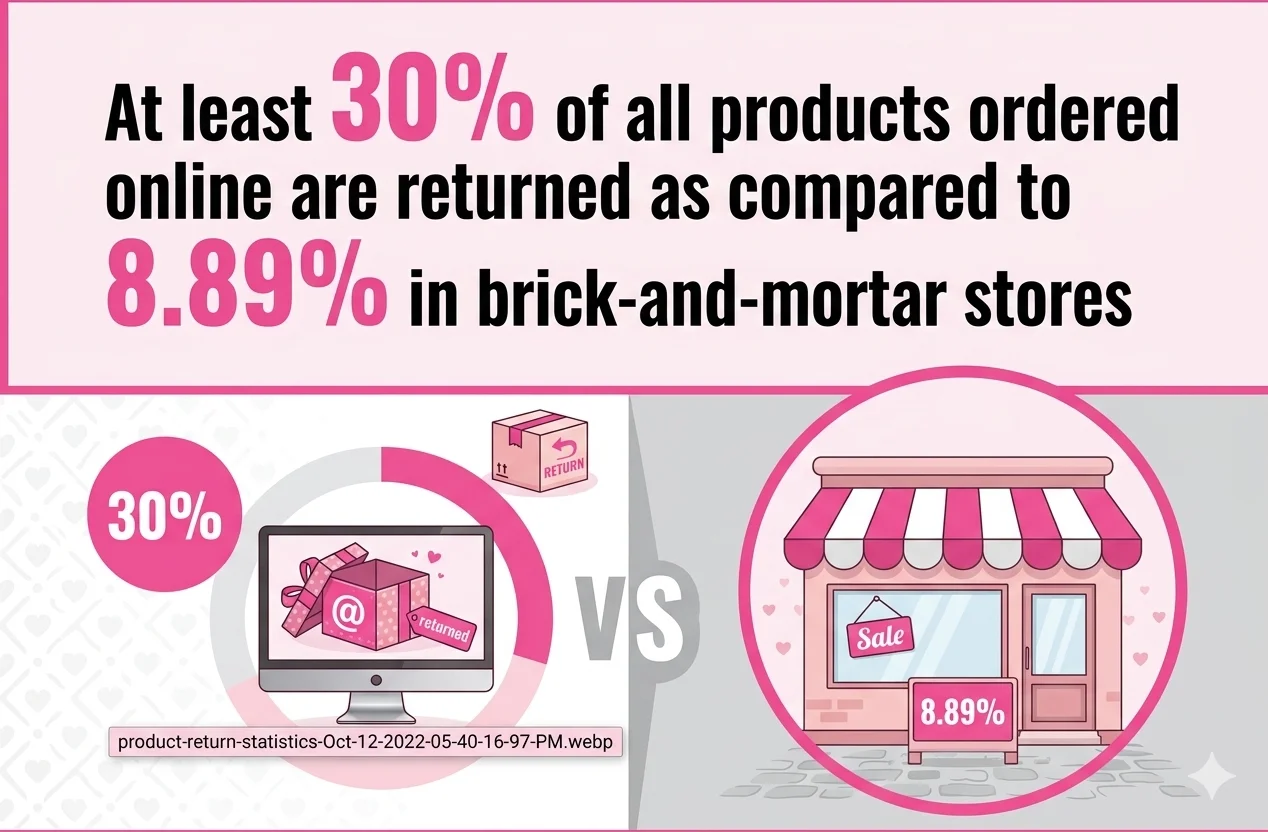
Regular shops have an advantage over ecommerce return rates because people often try things on before paying. It’s a big part of why in-store retail return rates typically range from 5% to 9%. Move the same products online, and the e-commerce return rate numbers climb past 20%. Each returned item can even cost 20% to 65% of its original value once you account for shipping both ways, restocking, and items that can’t be resold as new.
To put it frankly, customers often don’t realize that your indie e-commerce brand doesn’t have billions in capital like Walmart or Amazon, and can’t handle such high return rates.
So, what do you do about your fashion e-commerce return rates? Two real levers can bring the numbers down. They include tightening your return policy and closing the gap between what a customer imagines they’re buying and what actually shows up. We’ll cover both and especially highlight the second opportunity, which can significantly reduce your returns.
Why are Fashion Ecommerce Return Rates So High?
Even with the numbers we just outlined here, return rates don’t sit tidily in their own box on your budgeting spreadsheet. Every shift in that percentage directly affects your inventory costs, actual profit margins, and even your advertising budget. So, right off the bat, your pricing must always account for an expected return rate.
Looking at the e-commerce return rate by category, fashion and apparel consistently rank near the top. Fashion return rates run higher than ever before. That’s why monitoring your indie designer e-commerce return rates is important for survival.
What Type of Ecommerce Return Rates Happen The Most?
Nevertheless, as an indie fashion online store creator, you are not alone in your fight. Almost every other fashion e-commerce retailer is also fighting this problem.
Broadly, online fashion return rates fall into two buckets:
- Behavior-driven returns: Buyer’s remorse, or shoppers stretching your generous return window beyond its intent.
- Fit-driven returns: The item didn’t fit, the fabric didn’t drape as it did online, or the color looked different in person.
If you’re selling on marketplaces like Amazon or eBay, there’s a third layer on top of both: platform policy. Mandatory free returns and “refund at first scan” policies are built for marketplace scale. But many indie sellers have watched customers return items, citing reasons that don’t add up because platform policies allow those returns. In contrast, on indie shopping websites, you have more control.
Solution 1: Tighten your return policy
You can’t entirely get erring customers out of the way. But a few policy adjustments help protect your indie designer ecommerce return rates:
-
- Make exchanges free, but charge a small fee for refund-only returns: It nudges hesitant buyers toward keeping their money with your brand instead of bouncing entirely.
- Add a modest restocking fee for opened or used apparel: When you frame this clearly and up front as covering inspection and repackaging, they won’t see it as a penalty.
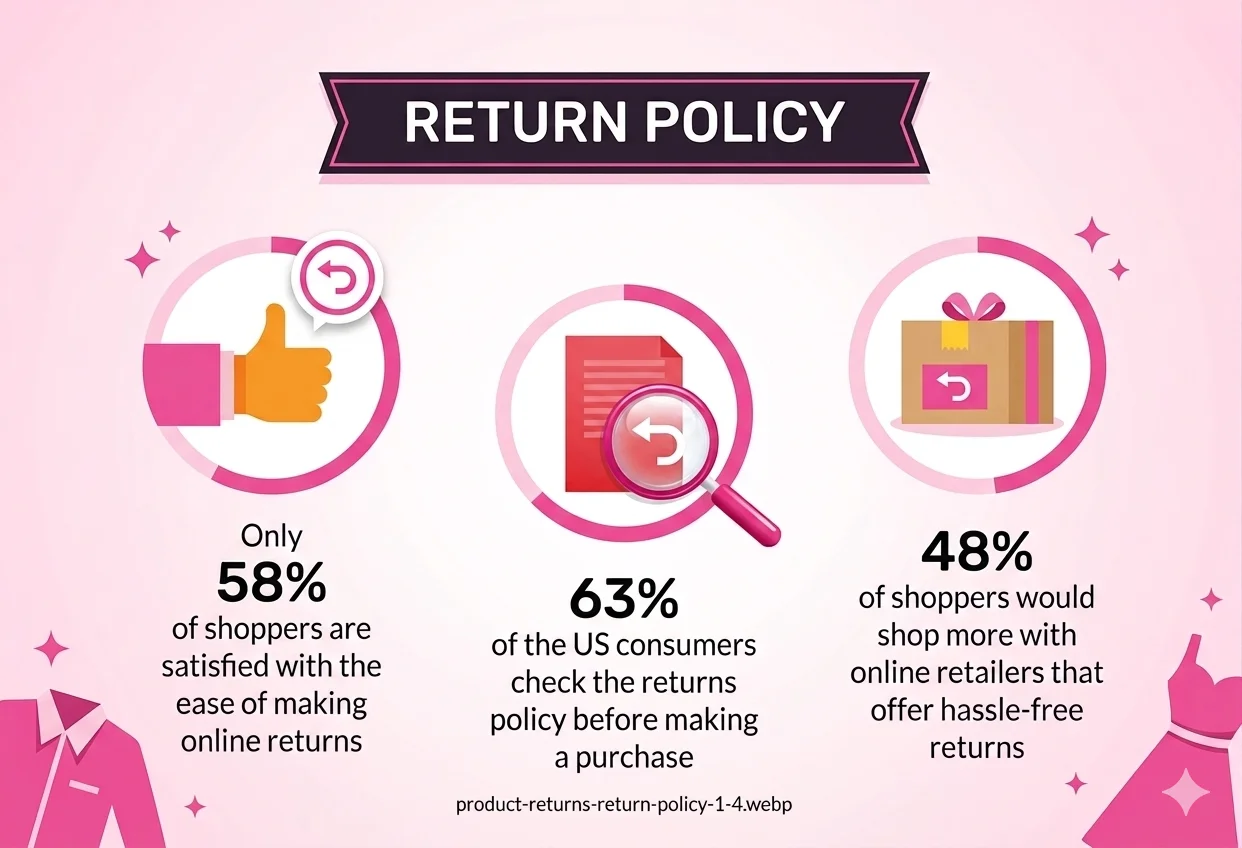
- Make your policy easy to find: Before they buy, many shoppers quietly search for “does this brand have a good return policy?” So, you should never hide or make it unclear, as that can cost you the sale directly.
These tactics handle buyer behaviors reasonably well. But they don’t reduce the number of returns because of fit, because they don’t solve the reasons your customers weren’t sure in the first place.
Solution 2: Close the imagination gap
You’ve also witnessed a shopper order two of the same item in two sizes to see which one fits, then return whichever doesn’t work. On the customer’s side, they love your pieces and are trying to be diligent about their purchases. But on your side, as an indie fashion seller, it means two shipments and a return on a single sale. Multiply that by a few hundred pieces, and you have a financial setback.
Detailed size charts, “hyperspecific” product descriptions, exact measurements, fabric behavior, and fit notes genuinely help. But they ask your customers to do a lot of work. This is where the imagination gap lives, and why customers often hedge by purchasing two sizes: they can’t picture the outcome.
Let Customers See the Fit Before they Buy to Reduce Ecommerce Return Rates.
What you actually need is a try-on solution that lets shoppers see a piece on a body that’s roughly their own. Instead of static images or single sample-size models, your customers can enjoy a more interactive clothing lookbook.
MakeOutfit offers a virtual-try-on feature built into the platform. Specifically, customers can upload their photos and use the AI fashion try-on tool to see a piece on a virtual representation of their body, alongside a catalog of models of different sizes and body types you’ve provided. With MakeOutfit, you can build an aesthetic clothing lookbook experience.
Shoppers can try on clothes virtually online using AI fashion try-on tools to see if they fit before buying.
Choose Niche Indie Marketplaces like MakeOutfit
Besides offering a virtual try-on software for e-commerce, MakeOutfit has an active discovery feed and community of indie buyers.
As a niche indie clothing marketplace built specifically for independent designers, you’ll have more room to set return terms that fit your margins. MakeOutfit is also an indie designer marketplace built around real people, rather than mass-market volume, and is set up to support both.
There’s a knock-on effect on returns, too. When you provide an interactive clothing lookbook, many “didn’t fit like the photos” claims disappear. It’s also worth using our mix-and-match outfit planner app to give customers aesthetic outfit inspiration. When shoppers use a mix-and-match outfit planner app, they buy with confidence, drastically reducing guesswork.
Where to Start: A Simple Rollout Plan
You don’t have to rebuild your entire catalog overnight, and trying that only slows you down. Here are 5 steps to start improving your indie designer brand’s ecommerce rates right away:
-
Start with your return data:
Pull a list of SKUs sorted by return rate, and focus on the reasons customers gave for their returns rather than just return volume.
-
Prioritize:
Focus on fitted and structured pieces, the items where drape, stretch, and proportions matter the most. These are exactly the pieces where a customer’s imagination has the hardest time filling in the blanks and where real humans try on photos to make the biggest impact. A relaxed cotton tee doesn’t need the same treatment as a structured blazer or a bodycon dress.
-
Upload to MakeOutfit
Bring on your 5-10 highest-return, most sensitive pieces, and use the preset AI models to get started on your more interactive lookbook. Three to four body types per item is a great start. You can also invite real, everyday people to virtually try on your clothes through MakeOutfit and share photographs that further enhance your lookbook’s aesthetic appeal.
-
Use your lookbook strategically
Make sure your tags are all set and link directly to your product page. That way, when indie buyers interact with them and are ready to buy, they will click through to your catalog and make their purchases.
-
Give it four to six weeks
That’s long enough to see a meaningful shift in the e-commerce return rate for those specific SKUs without seasonal noise muddying the picture. If the numbers move in the right direction, roll out the same approach to your next batch of high-return-rate items. If they don’t move, that’s useful information too. It might point to a sizing issue that photos alone won’t fix, which is worth knowing either way.
How to Tell if Your Fashion Return Rates are Decreasing
Before changing anything, pull your current return rate in fashion ecommerce. After publishing using MakeOutfit, track two things: whether your indie designer ecommerce return rates move, and whether “didn’t fit as expected” drops.
What counts as a high return rate for fashion e-commerce?
Generally, anything consistently above 20% is considered high for apparel. It’s worth investigating products one by one rather than treating them as a single number to fix all at once.
What’s a realistic return rate for an indie brand to aim for?
Closer to the low teens or single digits, depending on the category. Fitted pieces will always run higher than basics. No matter how good your photos are, the goal is to bring the average down, not eliminate returns.
The Bigger Picture
Big marketplaces can absorb high return rates in ways indie brands simply can’t, and they’ll always write the rules in their own favor. The smaller, more aligned spaces, the ones built around indie fashion online stores and real people rather than mass-market volume, give you something more valuable than reach: control. Control over your return policy, and control over whether your customer ever has to guess in the first place. Ready to take control? Join a community of indie designers who are slashing return rates and connecting with real shoppers who actually love their craft. List your brand on MakeOutfit today.