


Marketplace link-outs are the secret to controlling your brand’s margins and identity. No doubt, selling on Etsy or Amazon gets you in front of buyers fast. But it also means every sale runs through someone else’s checkout and data terms, and they’ll get a cut of your margins.
Warehousing and traditional marketplaces like Etsy and Amazon also commoditize your indie fashion brand.
They strip away your storytelling, hide your customer margins, and more. Here we’ll show you how you can use Marketplace link-outs to solve that problem, protect your brand identity and margins, and build a more sustainable business.
What are Marketplace Link-outs?
Marketplace link-out is also known as D2C link-out or Off-platform checkout. It is a checkout flow that bypasses the platform’s native cart. When you use this medium, it means you’ll process sales on your own storefront or website instead of inside a marketplace. Think of it like a digital storefront window. Shoppers discover your pieces elsewhere in a discovery environment. But when they click on “buy,” they’ll land on your website or storefront where you sell to them.
The Real Cost of Staying inside a Marketplace
The fee math for selling all your goods exclusively on traditional marketplaces is something indie brands underestimate. A $1000 sale on a typical marketplace can lose 15-20% to listing and transaction fees before payment processing is even factored in, plus any paid promotion you do within the platform only happens within that platform. Run that across a year of sales, and you have real capital that would have gone into developing your products more or marketing better to your customers.
Link-outs don’t eliminate selling costs, but they shift the math in your favor. Many marketplace link-out tools charge a flat subscription fee or a small affiliate fee instead of a per-sale cut. This means you’ll get better margins and a more direct connection with your customers.
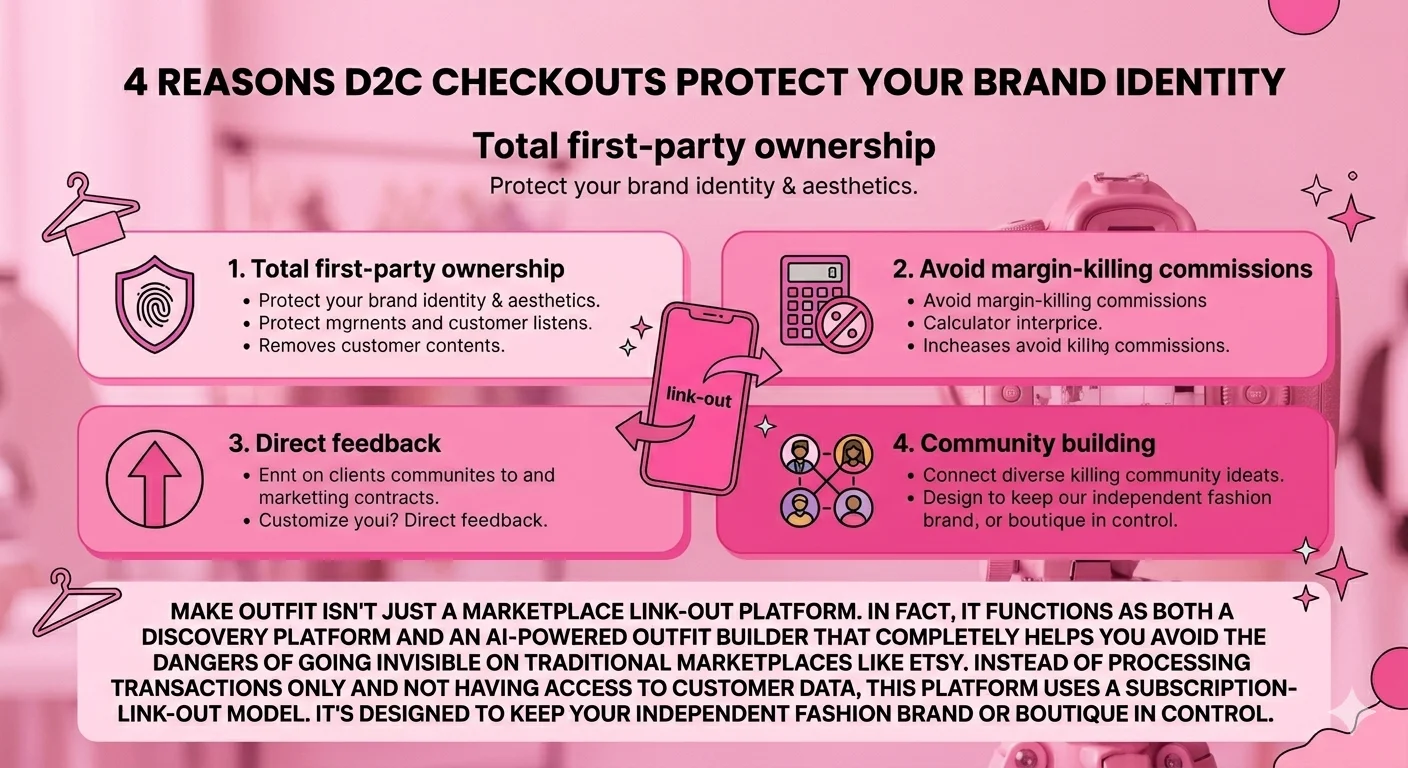
4 Reasons D2C Checkouts Protect Your Brand Identity
Total first-party ownership
Selling on major marketplaces or relying on warehousing means these platforms have all your buyer information. They only send you the sales, while you won’t have as many insights into what makes your customers buy. That data can be the secret ingredient in creating better products or even marketing more effectively for long-term growth. When you use D2C or off-platform checkouts, you have more opportunities to build relationships with your customers and nurture lifelong brand loyalty.
Protect your brand identity & aesthetics.
Marketplaces commoditize products, forcing brands to compete purely on price and keyword optimization instead of storytelling. In contrast, link-outs drive traffic directly to your independent storefront. There, you control how your customers perceive your brand and products through your visual identity and unique messaging.
Avoid margin-killing commissions
Warehousing and fulfilling your own large batches of inventory ties up valuable capital. If you decided to use third-party warehousing and marketplace commissions, it would still slice your profit margins by 20-30% or more. Link-outs lets you operate using a lean inventory-light drop-ship or made-to-order approach. This frees up cash flow to invest directly into creative brand building and marketing.
Direct feedback & community building
Although marketplaces like Etsy and Amazon still allow customers to leave reviews, there’s a detached quality to them, and they won’t turn into real conversations with customers. When you use Linkouts, you’ll have direct contact with your buyers. This means receiving instant, unfiltered product feedback. That level of interaction allows indie brands to iterate faster, build highly engaged communities, and even offer loyalty programs to their core audience.

Where to Get Marketplace Link-outs?
There are many ways to acquire and implement marketplace linkouts through SaaS platforms, affiliate networks, embedded checkout widgets, and specific discovery directories. These tools bypass the traditional marketplace checkout flow by routing high-intent traffic directly into your Direct-to-Consumer (D2C) ecosystem. Some of them include:
Embedded shopping carts & buy buttons
If you already have a brand website or content-focused blog, you can add a self-contained checkout script. A popular version of this is the Shopify Buy button, which allows you to paste a code on your blogs, partner websites, or niche marketplaces to link directly back to your secure Shopify cart. Other examples include Sellfy, Shoprocket.io, and Ecwid.
Affiliate networks & partner marketplaces
Some indie brands also partner with influencers, publishers, and curation sites. These allow them to build visibility for their business while receiving shoppers directly on their D2C checkout page or website. Popular options include working with influencers on Instagram or using affiliate networks like Impact.com and CJ Affiliate.
Visual curation platforms & Social commerce
This includes using platforms such as Instagram and Pinterest to showcase your catalog and reach customers. Then you’ll add a “where to buy” link that directs consumers back to your website or checkout page.
Niche & decentralized directories
For indie and craft brands, you have better luck attracting more customers from these niche platforms. They are a fantastic alternative to Etsy or Amazon. Here, your customers would see your fashionable products and then click on “buy,” which takes them directly to your brand.
What makes MakeOutfit the Ultimate Marketplace Link-Outs Platform?
MakeOutfif isn’t just a marketplace link-out platform. In fact, it functions as both a discovery platform and an AI-powered outfit builder. Therefore, it completely helps you avoid the dangers of going invisible on traditional marketplaces like Etsy.
Instead of processing transactions only and not having access to customer data, this platform uses a subscription-based link-out model. It’s designed to keep your independent fashion brand or boutique in control.
Direct Webstore routing
As an independent clothing designer or boutique owner, you can upload your latest apparel inventory to the platform. When a consumer decides to buy a piece, the platform redirects them straight to your brand’s original website for a seamless D2C checkout.
Subscription over commissions
You don’t have to worry about paying a steep percentage cut from every sale like Etsy or Amazon. The platform uses a flat subscription model for small businesses. Indie fashion brands only pay to be listed but keep 100% of their transaction revenue.
High-intent AI discovery
MakeOutfit has its own native virtual try-on technology and interactive outfit builder. Shoppers can mix and match items, test them out on virtual models or photos of themselves, and generate high-intent visual context. This pre-qualifies the traffic hitting your store, thereby boosting conversion rates.
Long-term asset visibility
Once your brand uploads its inventory catalog, those items are integrated into community feeds, seasonal collections, and user-generated wishlists. This gives your fashion brand persistent organic traffic months or years after submissions.
Wrapping Up
You don’t have to sacrifice your brand identity anymore for market visibility. Marketplace Link-outs through platforms like MakeOutfit give you back what traditional warehousing and marketplaces take away. You’ll have more opportunities to control your margins, storytelling, and direct connection to customers. List your inventory on MakeOutfit and see what it looks like to send shoppers to a storefront that’s actually yours. Ready to protect your brand identity and keep 100% of your revenue? Get started today.